
The Best Leisure Purchases Tend to Create Rituals, Not Just Convenience
The leisure purchases that earn their place over years tend to structure time rather than just save it. The difference between a ritual and a convenience is worth understanding.
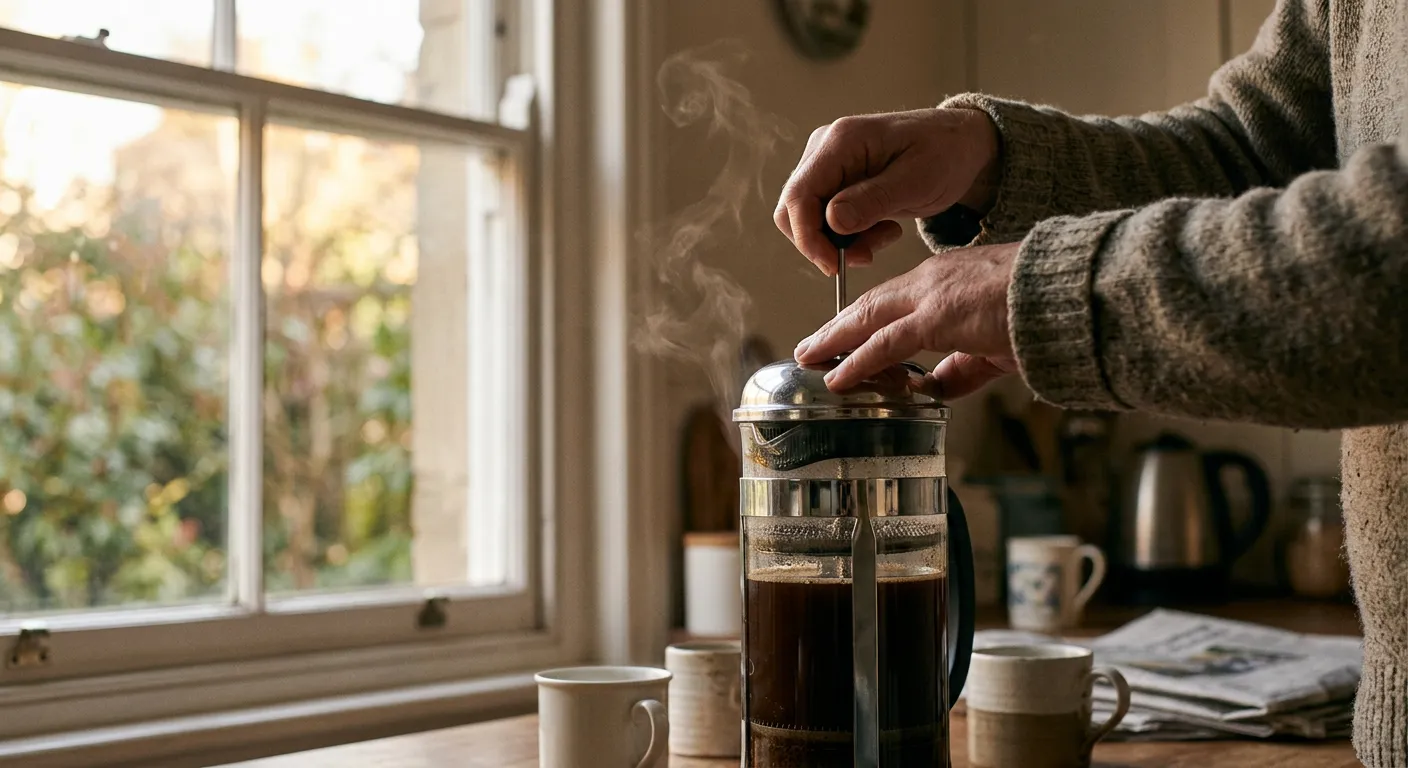
A French press is a worse coffee delivery system than a drip machine on almost every practical metric: slower, requires more attention, produces a less consistent result, generates grounds that need to be cleaned immediately or they become a problem. People who use one every morning usually love it. People who use an automatic drip machine value their extra eight minutes of morning time. Both preferences are defensible. But the French press users tend to be more attached to their coffee setup, more likely to describe it as part of their morning, and less likely to replace it with something technically superior.
The difference is structural. The French press created a ritual. The drip machine created a convenience. Both deliver coffee. Only one of them delivers the coffee as an event rather than an output, and for a specific subset of leisure-adjacent purchases, that distinction determines long-term satisfaction more reliably than functional quality does.
This is not an argument against convenience. It's an argument for knowing which mode a purchase is delivering—and knowing which mode you want—before you spend money on it.
What a Ritual Actually Is
A ritual, in the practical rather than ceremonial sense, is a repeated sequence of actions that produces a predictable experience and marks a transition between states. The morning coffee ritual doesn't just produce coffee—it marks the transition from sleep to wakefulness, from private to functional. The evening walk doesn't just generate steps—it marks the transition from work time to personal time. The ritual earns its value not just from its output but from its function as a temporal anchor.
Purchases that create rituals share specific properties: they have a process with enough steps to constitute a sequence, they produce an output that varies enough to require attention (making it an engagement rather than a delegation), and they deliver the output in a form that is sensory and present rather than queued and ambient. You smell the coffee while it's brewing. You feel the resistance of the dough. You hear the difference between a well-made and a poorly-made cast iron when it reaches temperature.
The best leisure purchases in this category tend to be analog or semi-analog: manual brewing devices, physical cooking tools, instruments, notebooks, books. Not because digital is bad—but because the ritual structure requires a process that is linear, sensory, and locally complete. Digital tools tend toward the ambient and the queued, which is excellent for convenience and poor for ritual.
Why Convenience Alone Has a Lower Ceiling
A convenience purchase is evaluated by the time or effort it saves. The return is real but calculable—it's the difference between the old friction and the new friction, and that delta is finite and eventually fully realized. Once the convenience is operational, it stops returning anything new. You stop noticing it. The satisfaction is a product of its newness, which expires.
A ritual purchase is evaluated differently because its return isn't the output—it's the experience of the process. The French press has been delivering the same return every morning for three years. Not because the coffee got better, but because the process—the grind, the pour, the wait, the press—remains an engagement with a small satisfying completeness. The ceiling on that return is much higher because the pleasure is in the doing rather than the having-been-done.
Most purchases occupy a spectrum between convenience and ritual rather than being purely one or the other. The question worth asking before a leisure purchase isn't "will this make the activity easier?" That's the convenience question. The more useful question is: "Will this make the activity more worth doing?" When the answer is yes, you're probably buying something that earns its place over years rather than months.
When Convenience Is Correct and Ritual Is Self-Indulgent
This framing doesn't mean manual, process-intensive approaches are always better. They aren't, and the romance of the difficult method is a genuine cognitive trap that leads people to maintain inefficient practices for the wrong reasons. If the ritual has become obligation rather than pleasure—if you're doing it out of identity rather than enjoyment—it stopped being a ritual and became a chore you're pretending is meaningful.
The honest test: does the process itself still generate something, or are you tolerating the process to get to the output? If the latter, switch to the convenient version without guilt. The French press was never morally superior to the drip machine. It was only better for the people who found the process genuinely engaging. For everyone else, it was just slower.
I'd start by identifying one recurring leisure activity where you've been tolerating a convenience approach that doesn't feel like much. That's the candidate for a process-based upgrade. And one ritual that has become a chore in disguise. That's the candidate for replacement with something more efficient. Both changes reduce friction, but in opposite directions.